Access Network Discovery and Selection
Access network selection and traffic steering between 3GPP access and non 3GPP access is supported using Access Network Discovery and Selection Function (ANDSF) and is also supported using RAN rule procedures without ANDSF. This section focuses on Network Discovery and Selection using ANDSF.
ANDSF is an optional network-side function that supplies a UE with policies and access network information, assisting how the device prioritizes between 3GPP and non-3GPP access networks as per operator’s policy when more than one is available. The policies for access technology selection can also be preconfigured in the terminals with dynamic updation or modification by the ANDSF.
For a UE, an ANDSF element located in its home PLMN is referred to as the Home-ANDSF (H-ANDSF), whereas an ANDSF element located in the visited PLMN is referred to as the Visited-ANDSF (V-ANDSF) for this UE. The H-ANDSF provides the UE with discovery information for access networks that provide connectivity to the home network, whereas the V-ANDSF provides the UE with discovery information for access networks that provide connectivity to the particular visited network. A roaming UE can connect to both H-ANDSF and V-ANDSF. The term ANDSF is used to refer to both an H-ANDSF and a V-ANDSF.
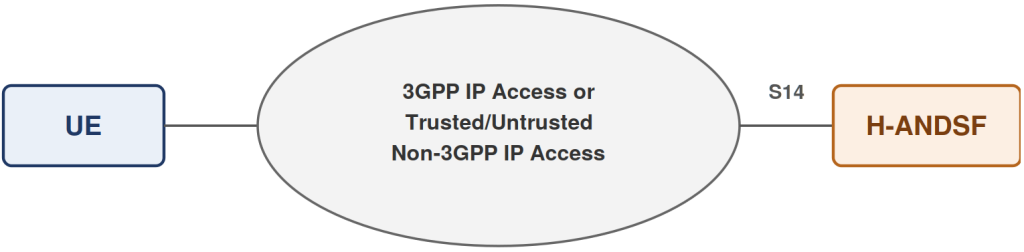
Figure 1: Non-Roaming Architecture for ANDSF
The H-ANDSF provides mobility and routing policies that apply in general, while the V-ANDSF provides mobility and routing policies valid only within the particular visited network. Where policies from the H-ANDSF and V-ANDSF overlap, the UE applies a precedence rule to resolve any conflict: in general, policies provided by the serving network — the V-ANDSF in a roaming scenario, or the H-ANDSF when the UE is in its home network — take precedence.
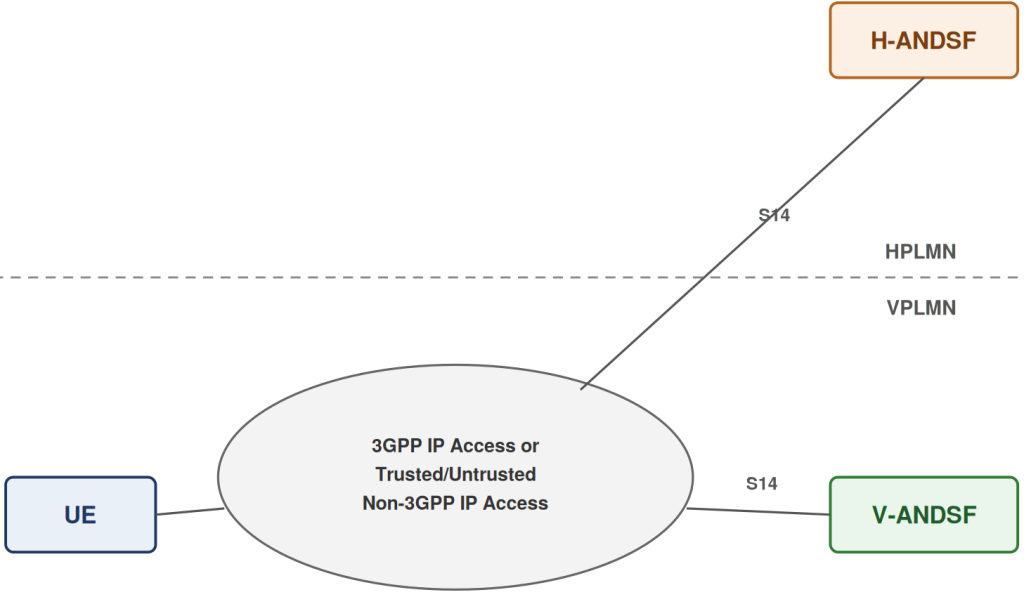
Figure 2: Roaming Architecture for ANDSF
The architecture for ANDSF contains a reference point S14 to the UE (Fig 1). The protocol on S14 between UE and ANDSF is IP based Open Mobile Alliance (OMA) Device Management (DM). Authentication and communication security between the UE and ANDSF is based on the Generic Bootstrapping Architecture (GBA), which authenticates the UE using its SIM-card credentials, with the IMSI serving as the user identity.
The solution supports both "pull" and "push" methods — the UE can either request information, or ANDSF can initiate the data transfer to the UE. By design, ANDSF is not suited to frequent or highly dynamic policy updates; it is not intended as a mechanism for continuously refreshing access information in near real time.
The UE may also provide ANDSF with subscriber-specific network discovery and selection information relevant to its vicinity, which can assist ANDSF in generating better discovery and selection information in return. Examples of such information include the UE's identity (IMSI) and its location (GPS coordinates, or the cell identities of nearby radio base stations). The ANDSF can provide the UE with three types of information:
- Access Network Discovery and Selection Information
- Inter-System Mobility Policies (ISMPs)
- Inter-System Routing Policies (ISRPs)
This is the most basic of the three information types ANDSF provides — it simply helps the UE build an accurate picture of what's around it, so the UE can scan for and evaluate networks more efficiently rather than searching blindly. It typically includes:
- A list of nearby access networks, spanning both 3GPP and non-3GPP options such as WLAN and WiMAX
- Identifiers for those networks — for example, the SSID of a nearby WLAN
- Conditions describing when this information remains valid, such as a specific location or time of day
ISMPs apply to a UE that can only use one radio access interface at a time, and consist of operator-defined rules guiding that UE's inter-system mobility decisions — specifically, whether to connect via 3GPP or non-3GPP access, and if non-3GPP, which type (e.g., WLAN). ISMPs are deliberately scoped to this 3GPP-versus-non-3GPP choice alone: they play no role in selecting between different 3GPP access types themselves (GERAN, UTRAN, or E-UTRAN) — that decision is governed by separate mechanisms outside ANDSF entirely. Concretely, an ISMP can specify:
- Whether a particular inter-system mobility event is permitted or restricted — for instance, a handover from E-UTRAN to WiMAX access
- Which access technology or network the UE should prefer when connecting to the EPC — for example, favouring WLAN over WiMAX
- A relative preference between specific access network identifiers — for example, preferring WLAN SSID X over SSID Y
- Conditions defining when and where the policy is valid, such as a time window or geographic area
Where a UE is capable of routing IP traffic across multiple radio access interfaces at the same time, ISRPs are the operator-defined rules governing how that traffic gets distributed — for example, deciding whether traffic goes via 3GPP access or a specific non-3GPP option such as WLAN or WiMAX. ISRPs also govern the UE's decisions about offloading certain traffic directly to WLAN, bypassing the EPC and PGW entirely. As with ISMPs, ISRPs play no role in choosing between different 3GPP access types (GERAN, UTRAN, or E-UTRAN) — that remains outside ANDSF's scope. ISRPs cover three distinct routing scenarios:
- Per-APN routing policies, which apply to a UE capable of maintaining multiple simultaneous PDN connections across different accesses. These specify which radio access types are permitted for PDN connections to a given APN (for example, permitting WLAN for a connection to APN-A), along with a prioritized ranking of which access technology or network should be used for that APN's traffic.
- IP flow mobility routing policies, which apply to a UE using DSMIPv6 together with IP flow mobility, allowing individual IP flows within a single PDN connection to be split across both 3GPP and WLAN access simultaneously, rather than the entire connection travelling over just one access at a time. This is achieved through filter rules that rank which access technologies or networks should carry traffic matching specific IP filters — based on criteria such as source/destination IP address, port numbers, transport protocol, DSCP, destination domain, or application identity — and that can also explicitly forbid certain access types for matching traffic (for instance, disallowing WLAN for RTP/RTCP flows on APN-A).
- WLAN offload routing policies, which apply to a UE using a locally-assigned WLAN IP address for traffic that never needs to reach the EPC or a PGW at all. These use the same style of filter rules as IP flow mobility policies, but for a different purpose: rather than splitting one connection's flows across two accesses at once, they simply mark which traffic should or shouldn't be offloaded to WLAN in this non-seamless way.
Before contacting a live ANDSF server, a UE may already hold a default set of ISMP and/or ISRP rules, which can be pre-loaded by the device manufacturer or configured by the operator in advance. Such default policies are generally understood to carry a validity period, after which the UE would need to request updated policy from ANDSF rather than continuing to rely on it.
The information and policies provided by the ANDSF to the UE may also depend on the UE’s subscription data. ANDSF can also be deployed following the User Data Convergence (UDC) architecture, in which subscriber-related data is held in a single, shared User Data Repository (UDR), rather than in separate databases maintained independently by each network function. Under this model, ANDSF acts as an "Application Front-End" — it no longer stores its own copy of the UE's policy data, but instead retrieves it from the shared UDR as needed, over the defined Ud reference point. This avoids duplicating the same subscriber information across multiple systems (ANDSF, HSS, application servers) and allows an operator to scale data storage and application processing capacity independently of one another.